Fair warning up front: I'm an engineer, not a writer. I think in systems and edge cases, so these logs will read like a guy more comfortable with a product specs, algorithms and production issues than a paragraph. You've been warned.
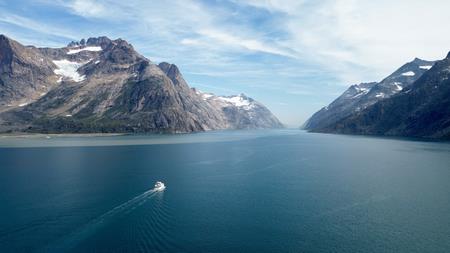
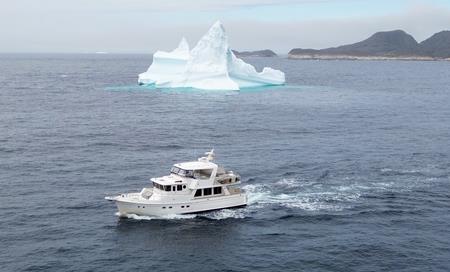
Last summer we crossed the Atlantic the unconventional way — the Viking route: Newfoundland, Greenland, Iceland, the Faroes, Scotland, into Britain. It was a trip of a lifetime, the kind that stacks up memories faster than you can file them. We cruised past freighter-sized icebergs in Greenland, the kind that make a 60-foot boat feel like a bath toy. We soaked in geothermal pools in Iceland while the wind tried to take the roof off the changing hut. And in the Faroe's we drove through the world's first (and still only) undersea roundabout — a glowing art installation spinning traffic around 180 meters beneath the seabed. I'll be honest about the family vote, though: for three of us the Sea of Cortez and the Bahamas still take the crown. The cold-water, big-scenery stuff was my favorite — I was outvoted, and I'd do it all again tomorrow. We wintered and cruised Europe through the spring, and now it's time to bring Next Chapter back to the U.S. — same ocean, opposite direction, a lot more open water: Europe to the East Coast via the Azores and Bermuda.
This is the first of a series of short daily logs for the group — honest updates on where we are, how the boat's behaving, and how a family of four holds up with no land in any direction. If you'd rather watch the dot move than read me ramble, you can follow us live: I rigged an NMEA 2000 tracker (custom hardware and web application) on board that pushes our position to a web app, so you can see exactly where we are at trackmywake.com/wake/next-chapter. (Building it was just natural for me... I build electronic products and large scale web apps as a profession)
The route. Three legs, three problems. Europe to São Miguel — the easternmost of the Azores — is ~800 nm, punching west into the prevailing westerlies, so the game is picking a window between lows. From there we'll work our way west through the islands to Horta, then point at Bermuda: ~1,800 nm on a great circle — except we won't fly the great circle. Being a powerboat flips the script here. A sailor curses the Azores High for its dead air; we want that calm, because flat water is exactly what a trawler likes. Riding it means dropping well south of the rhumb line, which stretches the leg to just over 2,000 nm. Then Bermuda to the East Coast is short, ~650 nm, except the Gulf Stream is parked right across the finish line. We leave now, late June, with one eye on the calendar — the goal is to be tied up before the peak of hurricane season, which grants no extensions.
The boat. Crossing turns out to be a problem of restraint, not horsepower. Our 53 carries 1,300 gallons of diesel. To get the range we need, we throttle the 405 hp Cummins QSL9 down to about 1,000 rpm — with a daily run-up to load it and keep the carbon from building up — and at that setting she sips ~2.4 gallons an hour at 5.8–6.0 knots. Slow? Painfully. But that burn rate is the whole game: it's what buys the range to chase the High south with real margin left over. That margin is for dodging weather, and for the deeply boring engineering virtue of not betting your family on the forecast being right. Out here the only refuel option is "don't need one."
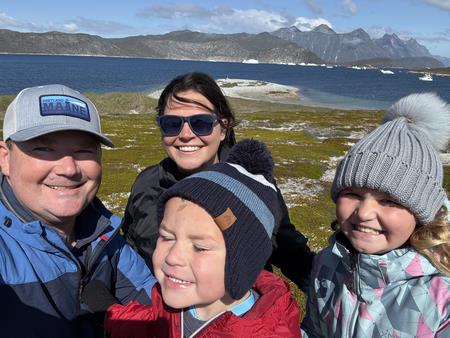
The crew. Crossing as a family of 4 is less heroics, more about planning -- thank you babe! Our daughter (10) stands a real watch now and is a genuinely useful set of eyes but also likes to keep very busy throughout the day. Our son (4) just needs the day to have a shape: meals, fishing, dance parties, anyway to get out energy.
One more thing. When we reach the East Coast, Next Chapter is going on the market — looking, fittingly, for her own next chapter. In three years we've put over 16,000 nm under her keel, including a North Atlantic crossing and a European winter, so these logs aren't a sea trial of an unknown quantity. They're a look at a proven, turnkey ocean boat doing exactly what she was built to do. If you've ever wondered whether a Selene 53 can carry a family across an ocean and back without drama, stick around — we're about to show you, in real time.
More soon, from somewhere with a lot of blue around it.
Watch the dot: trackmywake.com/wake/next-chapter.
— Chris & the crew of Next Chapter